
Why Paper Choice Changes How Your Printed Marketing Performs
Most printed projects start with design files and quantities. But then someone asks the question about paper type, weight, or finish. Should it be gloss or matte, thick or thin?
Whatever we used last time is probably fine, right? Sometimes it is fine. Often it isn’t.
Our team of experts at Custom Printing help our customers understand how paper choices make a difference in their final print project.
Paper changes how a piece feels in the hand, how long it survives, how the ink looks, and whether the recipient takes it seriously. Those things make more difference than most people expect. Two printed pieces can look similar on screen and perform very differently once they are out in the world, simply because the paper choice was different.
This quandary shows up every day in direct mail campaigns, sales collateral, and handouts that don’t quite land the way they were supposed to.
The first reaction happens before anyone reads a word
When someone pulls a postcard from the mailbox or picks up a folded card, they touch it before they read it. That moment can shape their reaction.
Thin paper feels disposable. It suggests something temporary and maybe something easy to ignore. Heavier paper slows people down. It can feel like ‘quality.’ Texture adds another layer. Smooth coated paper feels clean and modern, while uncoated paper feels familiar and practical. A subtle texture can suggest craftsmanship or care.
People rarely think about these reactions consciously, but they influence behavior. Does this piece get a second look, or does it get set aside or get tossed?
Paper sets the tone before the message has a chance to speak.
Coated and uncoated paper solve different problems
One of the most common mistakes in printing is treating coated and uncoated paper as interchangeable.
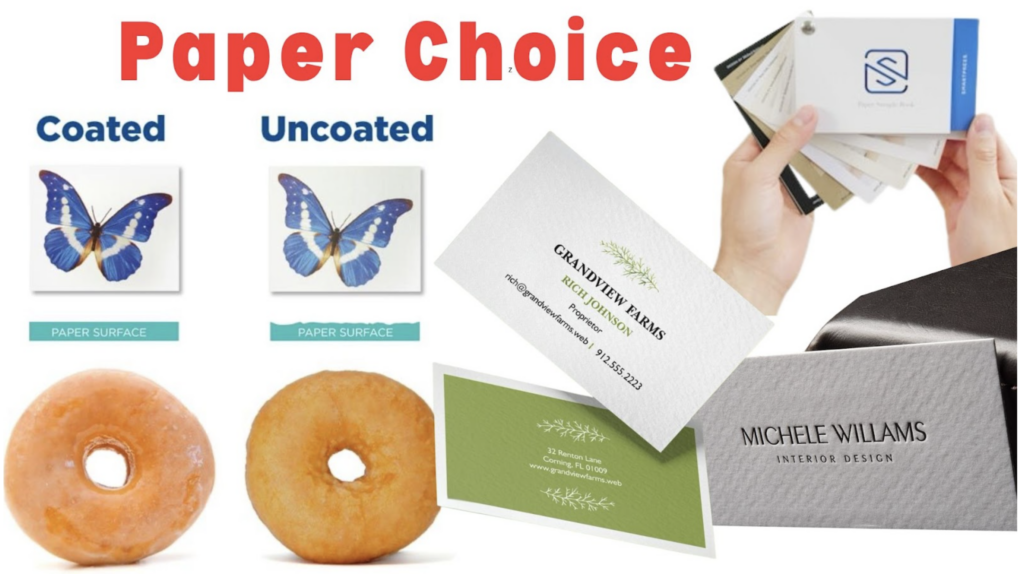
Coated paper keeps ink on the surface. Colors appear richer. Images look sharper. That is why postcards, product sheets, and photo-heavy designs often use gloss, matte, or satin coatings. The coating protects the ink and gives the piece a finished look.
Some Central California printing companies are cutting out the very features that make print more durable, like aqueous coating. At Custom Printing, aqueous coating isn’t a luxury. It’s a standard.
Uncoated paper absorbs ink. Colors soften. Contrast drops slightly. That can be a drawback or an advantage, depending on the goal. Uncoated stock is easier to read under bright light and easier to write on. It works well for forms, reply cards, menus, and anything meant to feel straightforward instead of promotional.
Problems show up when the paper choice fights the purpose of the piece. A glossy card that people are supposed to write on feels wrong. An uncoated sheet chosen for bold photography can make the design feel flat.
Weight and stiffness carry meaning
Paper weight causes confusion because the numbers are misleading. Text weight and cover weight are measured differently, and the label alone doesn’t tell you how stiff a sheet will feel.
A postcard that bends easily feels cheap, even if the design is strong. A brochure cover that flops open doesn’t hold attention. Heavier stock communicates confidence and durability.
Durability is important in practical ways too. Mail runs through sorting equipment. Flyers get stacked and carried. Sales sheets get passed around conference tables. Thicker paper holds up longer and keeps looking strong instead of tired.
Texture and specialty papers need a reason
Specialty papers can be effective, but only when they serve the message.
Linen, felt, laid, recycled, and soft-touch papers all create specific impressions. They can reinforce a brand’s personality or values. They can also get in the way. Heavy texture can interfere with small type. Soft-touch coatings feel great but show fingerprints. Recycled stocks can vary in color and smoothness.
When specialty paper becomes the focus instead of the content, it is usually the wrong choice. These stocks work best when the recipient notices them without thinking about why.
Paper changes how ink behaves
Ink doesn’t sit the same way on every surface. On coated paper, it stays crisp and defined. On uncoated paper, it spreads slightly into the fibers. That softens edges and reduces saturation. Pearlized paper adds a subtle shimmer, but because it behaves more like an uncoated sheet, colors can appear softer and less saturated than expected.
This is why colors can shift when a job switches paper late in the process. It is also why proofs are important. What looks perfect on a screen or on one stock may look different on another.
Good production planning accounts for this. Adjustments get made. Expectations get set correctly. The goal isn’t matching a screen perfectly. The goal is delivering the right result in the real world.
The right paper starts with how the piece will be used
The best paper choice always comes back to function.
Postcards need stiffness to survive the mail and feel worth reading. Brochures often work better with heavier covers and lighter inside pages. Presentation folders need structure so they don’t collapse once filled. Handouts and forms usually benefit from uncoated paper that reduces glare and accepts pen ink.
When paper supports how a piece is handled, everything feels more intentional.
Cost and production realities
Paper also affects production time and cost. Specialty stocks can slow presses. Heavier paper can push mailers into higher postage brackets. Coatings change drying times and finishing steps.
None of this means better paper should be avoided. It means those decisions need to be made early. Late changes are where costs and delays creep in.
Why experience
Most paper-related issues aren’t mistakes. They are missed conversations.
When paper is chosen without talking through how the piece will be used, expectations drift. When those conversations happen early, results improve. Fewer reprints. Fewer surprises. Better-performing campaigns.
A knowledgeable print partner asks questions before anything goes to press. Who will handle this and how long does it need to last? What should it communicate the moment someone touches it?
Those answers lead to better paper choices. Paper is part of the message.
When paper choice gets the same attention as design and copy, printed marketing works harder. It feels right and lasts longer. It earns attention instead of asking for it.
That happens from understanding how materials behave once ink hits paper and the piece leaves the shop. If you have a question about paper weights, textures, or coatings, give us a call, (805) 485-3700.