
The classic tri-fold brochure has been around for decades for good reason. It’s compact, inexpensive to print, and easy to distribute at events, in mailers, and inside presentation folders.
But when every brochure on a table looks the same, the format itself can make it get lost in the shuffle. However, a creative structure or fold can instantly change how someone interacts with the piece. The brochure becomes something people explore instead of something they quickly skim.
At Custom Printing, we’ve been printing brochures for Central Coast businesses for more than 50 years. There’s almost no brochure format or style we haven’t seen or can’t print for you. The goal is to create a brochure that delivers your message to your audience in an attractive and engaging way. It should capture and hold the reader’s attention and motivate them to take action. It has to be designed and printed to consistently represent your brand as you wish. Often, this involves a creative format for your brochure.
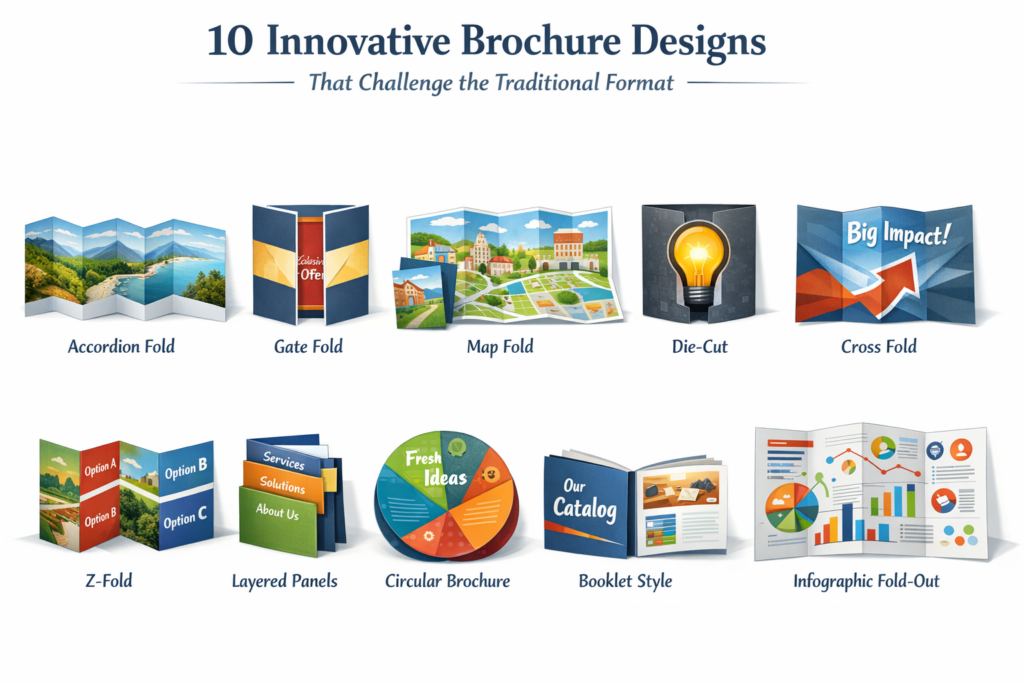
Here are ten brochure design approaches that move beyond the standard format and create a more memorable printed piece.
Accordion Fold Storytelling
An accordion fold brochure opens panel by panel like a visual timeline. Each panel becomes part of a sequential story.
This format works especially well when information unfolds in steps. Tourism guides, museum exhibits, product development timelines, or company history all benefit from this structure. As the reader opens the brochure, the narrative literally expands in front of them.
Accordion folds also create opportunities for bold panoramic graphics that span multiple panels when fully extended.
Gate Fold Reveal
A gate fold opens from the center like two doors. The reader pulls the panels apart to reveal a larger interior spread.
This format builds anticipation. The outer panels can present a question, teaser image, or bold statement. When the brochure opens, the main message or visual is revealed.
Luxury brands, real estate developments, and product launches often use gate folds because they create a sense of drama that a standard brochure cannot match.
Map Fold for Large Visual Layouts
A map fold allows a brochure to expand into a much larger sheet before collapsing down into a compact piece.
This structure works well when the content benefits from a large visual layout. Travel destinations, event campuses, construction projects, or large facilities often require maps, diagrams, or detailed layouts that need space.
When folded, the brochure remains easy to carry or mail. When opened, it provides a full overview.
Die-Cut Interactive Shapes
Die cutting allows designers to physically cut shapes, windows, or patterns into a brochure.
A die-cut window might reveal part of the next panel underneath. A curved edge could follow the shape of a product. A geometric cutout can create layered visual effects as pages turn.
These elements invite interaction. Instead of just reading the brochure, people begin exploring how the shapes connect with the content.
Die cutting works particularly well for product marketing, architecture firms, and creative agencies that want the brochure itself to demonstrate design capability.
Cross-Fold Layout
A cross-fold brochure opens in two directions. First the reader opens it like a standard brochure, then the interior panels unfold vertically or horizontally to create a large poster-style layout.
This approach allows designers to combine concise messaging with a dramatic visual centerpiece. For example, the outer panels can introduce a concept while the fully opened interior presents a large infographic, image, or product lineup.
The cross-fold creates a moment when the brochure suddenly becomes much larger than expected.
Z-Fold Product Comparisons
The Z-fold brochure creates a zig-zag pattern when opened. Each panel becomes part of a continuous flow of information.
This structure is particularly useful for comparisons or step-by-step explanations. For example, each panel might introduce a product feature, service tier, or stage in a process.
Because all panels remain visible when laid flat, readers can easily compare information across sections.
Layered Panel Brochures
Layered panel designs use staggered panels that extend slightly beyond each other. When the brochure is closed, readers can see a small tab or title from each section.
This creates a built-in navigation system. Readers can immediately identify the sections they want to explore.
The design works well for brochures that contain multiple categories of information such as product lines, service packages, or educational content.
Circular or Non-Traditional Shapes
Not every brochure has to be rectangular. Circular brochures, hexagonal folds, or irregular shapes can dramatically change how a piece is perceived.
Restaurants sometimes use circular menu brochures. Event promotions may use star-shaped folds. Technology companies occasionally use geometric structures that reflect their brand identity.
While these formats can require more complex printing and finishing, they stand out immediately in a stack of traditional materials.
Booklet-Hybrid Brochures
Some brochures blur the line between a traditional brochure and a small booklet. A folded cover opens into a stitched or saddle-stitched interior with additional pages.
This hybrid format provides the portability of a brochure with the storytelling depth of a catalog. Companies that need to explain complex services, product collections, or technical features often benefit from the additional space.
The cover still functions like a brochure introduction while the interior pages allow for more detailed content.
Fold-Out Infographic Brochures
Infographic-style brochures combine visual storytelling with large fold-out panels.
The outer panels introduce the topic. Inside, the brochure unfolds into a large infographic that explains data, processes, or research results in a visual format.
Industries such as healthcare, education, technology, and finance often use this style to explain complex information in a way that is easier to understand.
Why Format Matters
Creative brochure formats do more than look different. They change how people interact with the printed piece.
A unique fold encourages curiosity. A larger unfolding panel creates a moment of surprise. A die-cut element invites the reader to physically engage with the design.
These small experiences make the brochure more memorable and increase the likelihood that the piece will be kept instead of discarded.
Design and Print Must Work Together
Innovative brochure formats require careful planning between the designer and the printer. Paper weight, folding techniques, finishing methods, and die cutting all affect how the final piece performs.
Working with an experienced commercial printer ensures the creative concept can be produced efficiently while maintaining clean folds, accurate alignment, and durable construction.
When design and production are aligned, a brochure becomes more than a marketing handout. It becomes a physical brand experience that people remember long after they leave the event, meeting, or showroom.
Let’s Get Started
Custom Printing is your one-stop commercial printing partner for all your marketing and trade show materials. Contact us today to get a customized quote for your brochure or any other print project you’re working on.