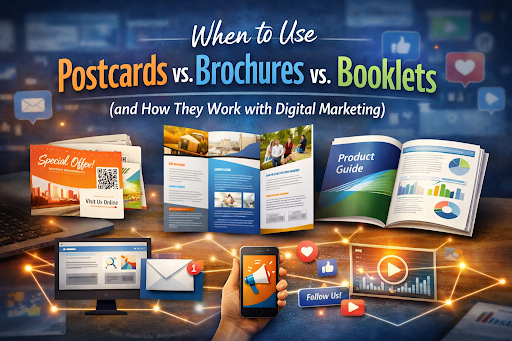
When to Use Postcards vs. Brochures vs. Booklets (and How They Work with Digital Marketing)
Choosing the right printed piece affects how your audience responds, but the real results show up when print and digital work together. Postcards, brochures, and booklets each serve a different purpose. When you connect them to your website, email, and digital campaigns, they become part of a system instead of one-off materials.
Here’s how to think about each format and how to tie it into the rest of your marketing.
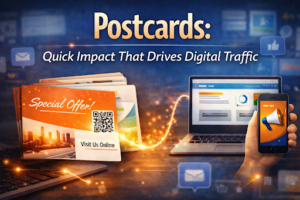
Postcards: Quick Impact That Drives Digital Traffic
Postcards are built for speed. There’s no envelope and no delay. Whether you mail it or hand it out in person, the message is right in front of the reader, making the marketing postcard one of the strongest tools for driving immediate action.
You should use postcards when you have a focused message and a clear next step for your recipient. Promotions, event announcements, seasonal offers, and reminders all fit well here.
Postcards work best when they push recipients to a specific digital destination. Instead of sending people to your homepage, use a dynamic QR code to direct them to a customized landing page that mirrors the message on the card. This keeps the experience consistent and improves response rates. Dynamic QR codes also provide for usage analytics, so you can see how many recipients of your card actually scanned it to visit your landing page.
Data from USPS shows that integrated mail campaigns using digital triggers can qualify for postage discounts and often produce stronger engagement.
Once someone visits your page, retargeting takes over. Digital platforms like Google Ads and Meta Ads allow you to continue showing ads to that same audience. That second and third touch often makes the difference.
Email fits naturally into this flow. If your landing page captures contact information, you can follow up with a short email sequence that reinforces the same offer and drives action.
Postcards act as the entry point. They grab attention and move people into your digital funnel.
Brochures: Supporting Sales Conversations and Online Research
Brochures give you more room to explain what you do and why it matters. They’re often used when someone is interested but needs more information before making a decision.
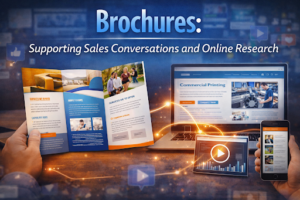
Use brochures to present services, outline benefits, and walk prospects through your process. They work well in meetings, proposal packets, and follow-ups after an inquiry.
The connection to digital comes from alignment. Your brochure should reflect the same structure and messaging as your website. If you highlight three core services in print, those same services should be easy to find online.
Each section of your brochure should point to a deeper resource. That might be a service page, a blog article, or a short video. For example, you could link to a section explaining your capabilities so you can direct readers to your full capabilities overview.
This approach allows you to keep the brochure clean while giving readers access to more detail when they want it.
Brochures also support email marketing. After handing one out at a meeting or event, you can send a follow-up email that mirrors the same content and links back to your site. This reinforces your message and gives prospects another way to engage.
Video adds another layer. Including a simple call to action like “See how this works” can lead to a short explainer video hosted on your site or YouTube. According to Wyzowl, most buyers prefer learning about products or services through video, so giving that option increases engagement.
Brochures help move prospects from interest to consideration by connecting print with online research.
Booklets: In-Depth Content That Builds Trust Across Channels
Booklets are designed for situations where your audience needs more detail. They’re ideal for complex services, high-value products, or industries where credibility matters.
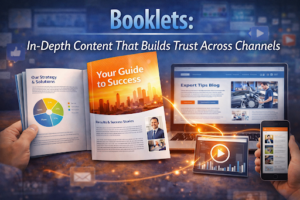
Use booklets for company overviews, product catalogs, onboarding guides, and educational content. These are often shared with qualified prospects or existing customers rather than a broad audience.
Booklets connect to digital by extending your content ecosystem. A strong approach is to take your best-performing blog content and expand it into a printed guide. Then, within the booklet, point readers back to updated resources online.
For example, a section in your booklet might introduce a topic and then direct the reader to a related article or video for a deeper dive. This keeps your printed piece relevant while allowing your digital content to stay current.
Content hubs work well here. If your booklet covers a range of topics, you can guide readers to your blog for ongoing insights:
External credibility also matters. Referencing trusted sources helps reinforce your expertise and gives readers additional context if they want to explore further.
Booklets also support longer email follow-ups. After sending a booklet, you can schedule a series of emails that highlight specific sections and link to related content online. This keeps your brand top of mind without overwhelming the reader.
Because booklets require more investment, they should be used where there is a clear opportunity to build a relationship or close business.
Putting It All Together
The strongest campaigns combine formats and channels into a single experience.
A postcard introduces your message and drives someone to a landing page.
A brochure supports the next step by explaining your services.
A booklet provides the depth needed to build trust and support a final decision.
At each stage, digital channels carry the conversation forward. Landing pages, email follow-ups, blog content, and video all reinforce what your printed materials start.
When print and digital are aligned, your marketing becomes easier to follow and more effective. Each piece has a role, and each one leads naturally to the next step. That’s where you start to see stronger response, better engagement, and more consistent results.