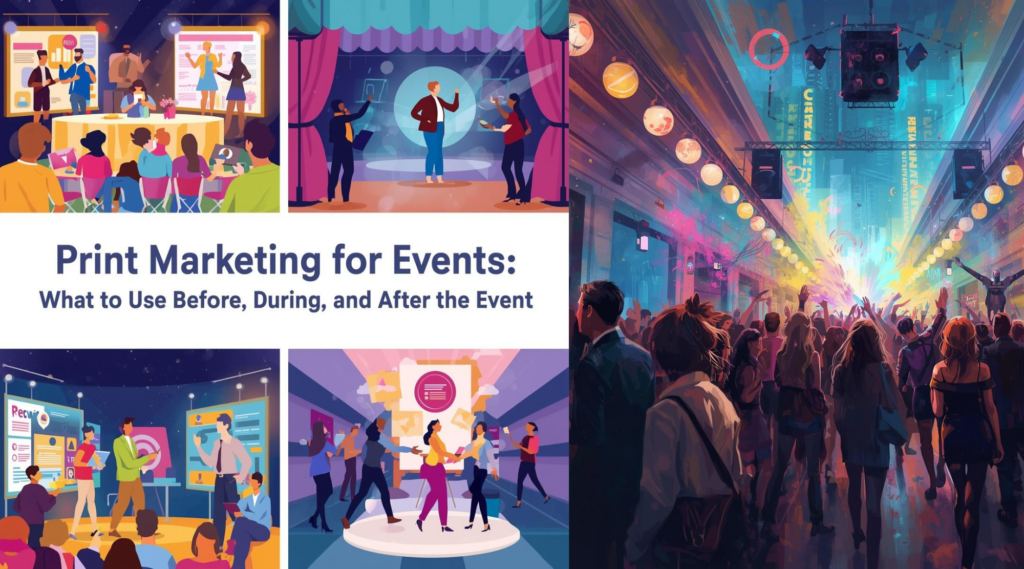
Events come and go quickly. What makes them effective from a marketing standpoint is how well you build momentum before people arrive, how clearly you guide them while they’re there, and how you stay in front of them after they leave. Print plays a role in each of those phases, especially when it’s connected to your digital channels.
Here’s how to think about it in a way that drives attendance, engagement, and follow-up.
Before the Event: Driving Awareness and Registration
The goal before an event is simple. Get the right people to show up. Print gives you a physical way to reach prospects where email and digital ads sometimes get ignored.
Postcards are one of the most effective tools at this stage. They’re quick to read, easy to distribute, and cost-efficient for targeted mailings. A well-designed postcard with a clear headline, date, and call to action can drive traffic to your registration page without overwhelming the reader. Pair that with a QR code or a short URL that leads directly to your event landing page.
Invitations work well for more selective or higher-value audiences. A printed invitation signals that the event matters. It feels more personal than a digital invite and can increase perceived value, especially for fundraisers, corporate events, or VIP gatherings. For added impact, consider heavier stocks, specialty finishes, or even folded invitation formats that create a sense of anticipation before the event.
Flyers still have a place too, particularly for local events. Coffee shops, community boards, gyms, and retail counters are all opportunities to reach people who are already nearby. Keep the design simple and focused on the essentials.
You can also expand your reach with posters placed in high-traffic areas, rack cards distributed through partner businesses, and door hangers for hyper-local targeting. For B2B events, a printed sales sheet or event teaser left behind during sales visits can reinforce your invitation in a more personal way.
Your print pieces should point to a digital hub where people can learn more and register. Platforms like Eventbrite are often used to manage registrations and track attendance. Their event marketing resources are worth reviewing here: https://www.eventbrite.com/blog/event-marketing/
During the Event: Guiding and Engaging Attendees
Once people arrive, print shifts from promotion to experience. Now it’s about helping attendees navigate the space and stay engaged.
Banners and large-format signage set the tone right away. Entrance signage, step-and-repeat backdrops, and branded displays create a strong visual presence and give attendees natural places to take photos and share on social media.
Directional signage is one of the most practical pieces you can invest in. Clear, easy-to-read signs reduce confusion and keep people moving smoothly through the event. That includes everything from registration areas to breakout sessions and restrooms. Floor graphics can also be used to guide foot traffic in larger venues.
Programs and printed schedules give attendees something to reference throughout the day. Even if you have a mobile app or digital schedule, many people still prefer having something in hand. It’s quick, reliable, and doesn’t depend on battery life or connectivity.
Name badges and lanyards are another important detail. They help attendees connect with each other and can be color-coded by role, access level, or group. For networking-focused events, this small detail can make a big difference.
Branded materials like handouts, presentation folders, and product sheets extend your message beyond the stage. If someone attends a session or visits a booth, they should leave with something tangible that reinforces what they just learned. Including QR codes on these materials creates a direct path to additional content, whether that’s a product page, a video, or a contact form.
Menus, table tents, and sponsor signage can also be part of the mix, especially for conferences, trade shows, and fundraising events. These pieces not only provide information but also create additional branding opportunities throughout the space.
Social media can be woven in here as well. Hashtags printed on signage and materials encourage attendees to share their experience, which extends your reach in real time.
After the Event: Staying in Front of Your Audience
Once the event ends, most organizations shift back to digital follow-up. Email campaigns and retargeting ads are important, but print can help you stand out again.
Follow-up postcards are a simple way to reconnect. They can thank attendees for coming, share highlights, or point them to additional resources. Because they arrive separately from the flood of post-event emails, they often get more attention.
Thank-you cards are especially effective for smaller, more personal events. A printed note adds a human touch that digital messages can’t quite replicate. For donors, clients, or partners, that extra effort can strengthen the relationship.
You can also send recap brochures or mini booklets that highlight key takeaways, speaker insights, or event photos. These pieces extend the life of the event and give recipients something worth keeping.
Leave-behind materials also come into play here. If attendees took home brochures, product sheets, or branded collateral, those pieces continue to work after the event. They sit on desks, get passed along, and serve as reminders of your brand.
For ongoing engagement, consider follow-up mailers tied to specific actions. For example, attendees who visited a booth or scanned a QR code could receive a personalized piece with next steps, offers, or additional information. This is where Variable Data Printing can connect your event marketing with broader campaigns.
The key is consistency. The message someone saw on your postcard before the event should match what they experienced onsite and what they see in your follow-up. That alignment builds trust and makes your marketing feel connected rather than scattered.
Custom Printing helps businesses plan and produce event materials that work across all three phases. From direct mail and invitations to large-format signage and post-event follow-up pieces, the goal is the same throughout. Keep your message clear, make it easy to act, and give people a reason to remember you after the event is over.