

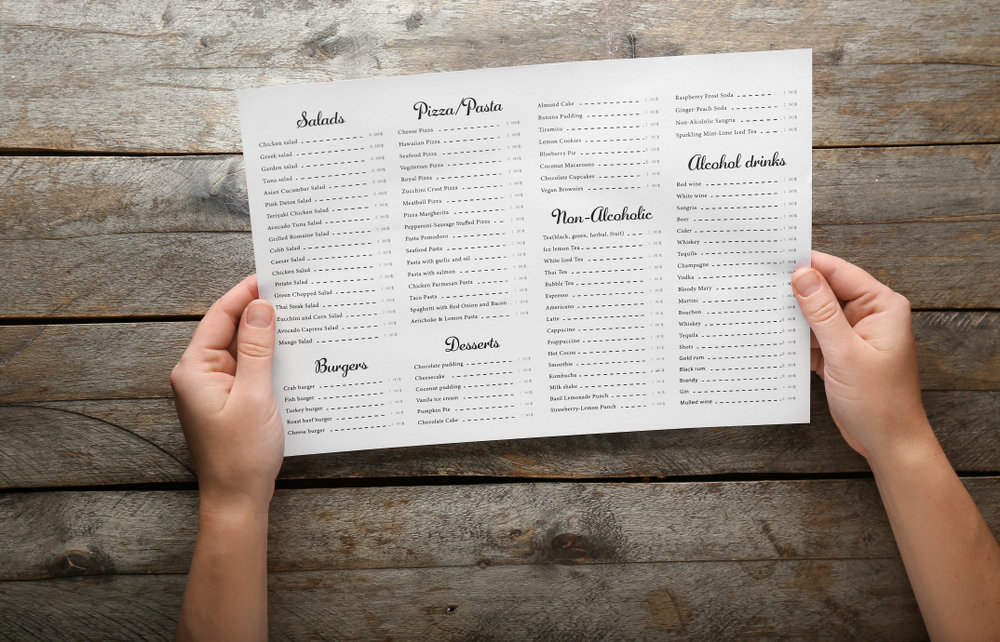
For decades, printed menus served as a standard part of the dining experience. Every customer expected one, and every restaurant kept stacks of freshly printed menus ready to go. Over the years, new formats appeared. Quick service and fast casual chains adopted permanent menu boards. Some full-service restaurants shifted to chalkboards or digital menu screens. During the pandemic, QR codes and digital menus became widespread out of necessity.
After several years of experimentation, many restaurants have chosen to keep QR codes as a convenience but return printed, handheld menus as the primary way customers browse and order. Printed menus continue to outperform digital alternatives for clarity, brand presentation, and overall customer comfort. If you are considering a menu update, these factors highlight why printed menus remain essential.
Custom menu printing: https://customprintinginc.com/menus/
Printed Menus Strengthen Your Brand
A menu shapes how customers perceive your restaurant. For most guests, it is the first branded item they interact with once they sit down. A well-designed printed menu communicates identity, pricing strategy, food quality, and the overall tone of the restaurant.
Design decisions matter. A casual restaurant might use brighter colors, clean photography, and straightforward descriptions. A fine dining restaurant may prefer heavier paper stocks, understated typography, and more expressive menu copy. Your name and logo should be visible and consistent with your signage, website, and to-go packaging.
Practical considerations matter as well. Legible type sizes help customers with aging eyesight or low-light conditions. Clear descriptions reduce ordering confusion. Good photography, when used sparingly, helps guests visualize portions and ingredients.
Print design considerations: https://www.printing.org/page/graphic-design-basics (external reference)
Printed Menus Guide Customers Toward Better Buying Decisions
Menu design affects profitability. A handheld menu lets you influence customer choices in ways that a QR code or scrolling digital view often cannot match.
High-margin dishes can be placed in the most visible areas of the menu, supported with larger type or featured boxes. Lower margin items can appear in less dominant positions. This is a proven approach used across many segments of the industry. The National Restaurant Association notes that thoughtful menu engineering increases both sales and contribution margins.
NRA menu engineering reference: https://restaurant.org/education-and-resources/resource-library/menu-engineering-basics/
Printed menus also allow for controlled pacing. Guests flip pages at their own speed. They discover items they might not scroll past online. This often increases average check values.
Printed Menus Make It Easy to Highlight Specials and Seasonal Items
Flexibility is one of the strongest advantages of printed menus. Restaurants commonly produce multiple menu formats: lunch menus, dinner menus, drink menus, dessert menus, kids’ menus, happy hour menus, tasting menus, and seasonal menus. Each serves a specific purpose without overwhelming the main menu.
Short-run digital printing makes it cost-effective to print limited-time menus for holidays, themed dinners, or special events. Once the event is over, those menus can be stored for the next season or recycled.
Short-run menu printing: https://customprintinginc.com/digital-printing-services/
Tabletop menus remain useful for desserts, featured cocktails, and after-dinner add-ons. They stay visible throughout the meal and often drive incremental revenue.
Restaurants and caterers that host private events also use customized menus as keepsakes. Wedding parties, corporate dinners, and family celebrations often request personalized menus that match the theme of the event. These not only enhance the experience but help servers stay aligned with the event’s selected menu options.
Print Supports Cleanliness Without Sacrificing Customer Comfort
At the height of the pandemic, some restaurants moved away from printed menus because of concerns about surface transmission. Research since then has shown that menus are not a meaningful source of viral spread.
CDC reference on surface transmission: https://www.cdc.gov/coronavirus/2019-ncov/faq.html#Cleaning-and-Disinfection
That said, cleanliness remains part of the dining experience. Restaurants now use a few approaches that balance hygiene with customer expectations:
Disposable menus. Ideal for casual restaurants or high-traffic environments. They are inexpensive, recyclable, and allow customers to take menus home.
Laminated menus. These wipe clean easily and last significantly longer than unprotected paper. They are especially helpful for bars, outdoor dining, and family restaurants.
Coated or bound menus. Multi-page menus can be produced with protective coatings or inserted into binders. Restaurants can replace individual pages as specials change or as pages wear out.
Custom Printing supports all of these menu formats, including waterproof and synthetic stocks for outdoor and high-moisture environments.
Menu formats overview: https://customprintinginc.com/menus/
Why Printed Menus Still Lead the Way
Digital menus are convenient, but they cannot replace the clarity, comfort, and brand presence of a printed menu. Handheld menus help customers make decisions, showcase your personality, highlight profitable items, and support special events with ease. They are also simple to update and cost-effective to produce in any volume.
Custom Printing works with restaurants across California and the West Coast to design and print menus that fit the exact needs of the business. Whether you need short-run seasonal menus, laminated menus, or premium offset-printed multi-page menus, our team provides production options that support both durability and design.
If you’re planning to refresh your menus, contact Custom Printing.