Binding is rarely the first decision in a booklet project. Most of the time, it comes up at the end, right after page count and paper are locked. Wire or spiral? The answer is often based on what was used last time. That is how mistakes happen.
Wire binding and spiral binding behave very differently once the booklet leaves the print shop.
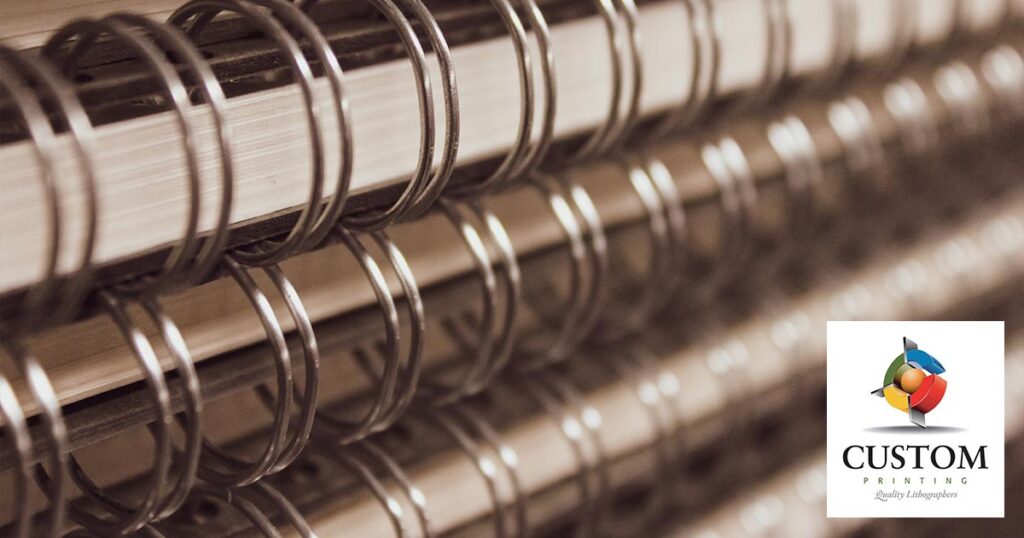
Wire binding uses metal loops. It keeps pages in line. Covers stay square. The booklet holds its shape. When you flip through it, nothing feels loose. It looks deliberate, as if it belongs in a meeting or on a desk rather than on a job site.
That is why wire binding shows up so often in presentations, proposal books, training materials, and branded guides. It looks finished. It feels controlled. If the booklet is intended to represent a company to a client, wire binding usually does the job better.
Wire binding also handles heavier covers well. Thicker stock stays flat and does not droop. The whole piece feels solid.

The problem shows up later. Metal does not forgive abuse. Bend, twist, or jam the wire into a bag often enough, and the spine will deform. Once it does, it stays that way. Pages may still turn, but the booklet never looks right again. Wire-bound pieces assume they will be treated with some care.
Spiral binding does not make that assumption. Spiral binding uses a plastic coil. It flexes. You can fold the booklet back on itself completely. You can write in it easily. You can throw it into a backpack, pull it out, and keep going. That is why spiral binding dominates manuals and workbooks.
Instruction guides, safety manuals, field documents, and internal training books get used hard. They get opened constantly. They get written on. They get dropped. Spiral binding survives that kind of life far better than wire.
There is a tradeoff. Spiral binding looks functional. It does not look premium. For internal use, nobody cares. For customer-facing materials, sometimes they do. Spiral binding signals that the booklet is intended for use, not presentation.
Page count also plays a role. Both bindings can handle thicker books, but they feel different. Wire binding keeps a tighter, more controlled profile as the book gets thicker. Spiral binding accommodates bulk easily, though lighter paper can make the booklet feel a bit loose in the hand.
The easiest way to choose is to ignore how it looks on day one and think about day thirty.
If the booklet’s job is to make a good impression in a meeting or represent your brand, wire binding usually makes sense. If the booklet is intended to be opened every day and withstand real use, spiral binding is usually the smarter choice.
Neither option is better by default. The wrong one just becomes obvious faster.